Monday, September 5, 2022

Philemon's Forgiveness


Jesu Juva

Philemon 1-21                                                                

September 4, 2022

Proper 18C                                  

 Dear saints of our Savior~

          The three main Scripture readings for each Sunday of the church year are always predetermined.  Those three readings are laid out for us in advance by what’s called the “lectionary.”  The lectionary we use runs on a three-year cycle.  Now, here’s the beauty of the three-year lectionary:  If you faithfully attend every service here for three years straight, your ears will hear God’s Word proclaimed from each and every book of the Bible—all sixty-six, including the briefest of those books.  Nothing gets overlooked—not Second John or Third John or Jude.  Not even Obadiah or Philemon.

          Today’s the day for Philemon.  Philemon is on the menu today; and we won’t hear from Philemon again for another three years.  But there’s a problem with preaching on Philemon:  Reading the book of Philemon is like arriving late for a movie.  After you stumble around in the dark to find your seat, a lot of the action has already taken place.  The main characters have already been introduced.  But by paying close attention, you can piece together the plot; and, ultimately, enjoy the show.

          So, dial-in to what I’m about to say because here’s what you’ve missed; here’s the back story:  St. Paul, who wrote this epistle, is in prison somewhere—probably Rome or Ephesus.  In prison, Paul gets a visitor named Onesimus.  Onesimus, whose name means “useful,” had been a slave in the household of Philemon.  And this Philemon was a wealthy Christian layman in the city of Collosae.  In fact, the Christians of that city met together for the Divine Service in Philemon’s house.

          Philemon’s slave, Onesimus, had run away.  It might actually be better for us to think of Onesimus as Philemon’s household manager, since “slave” has so many negative, modern connotations.  Onesimus ran away (which was bad enough); but to make matters worse, he didn’t just run away emptyhanded.  No, Onesimus helped himself to Philemon’s cash and credit cards when he made his dash for freedom.  Philemon had trusted Onesimus, gave him great responsibility, promoted him, compensated him, educated him.  It might well have been Philemon who gave Onesimus his name which, as you recall, means “Useful.”  But now, as a fugitive thief, “Mr. Useful” had become quite useless.

          But while Onesimus was on the run as a fugitive—as he rose to the top of the FBI’s most wanted list—a beautiful thing happened.  He came into contact with a prisoner named Paul; and this Paul told Onesimus the good news about Jesus.  And Onesimus—the useless, fugitive thief—became Onesimus—the baptized child of God.  The fugitive became a faithful follower of Jesus, the Christ.  St. Paul became a father in the faith to Onesimus.  St. Paul called Onesimus “my very heart” and “my child.”

          Only one problem still loomed large—Philemon.  He was still counting his losses back in Collosae—filing police reports and insurance claims—preparing the blood hounds to track down Onesimus.  The epistle reading we heard today was St. Paul’s attempt to play the peace-maker—to make peace between Philemon and Onesimus.  “Blessed are the peacemakers,” said Christ our Lord.  Have you ever attempted to play the peacemaker?  Have you ever attempted to reconcile two Christians who had solid reasons to write one another off?  Today St. Paul shows us how it’s done.

          St. Paul begins by appealing to Philemon’s faith in the Lord Jesus, and his love for all the saints.  I thank my God . . . because I hear of your love and of the faith that you have toward the Lord Jesus and all the saints.  Faith and love go together.  They are like two sides of the same coin—faith and love.  You really can’t have one without the other.  It’s why we often pray after the Lord’s Supper that God would strengthen us, in faith toward [Him] and in fervent love toward one another. 

          It would be on the basis of Philemon’s God-given faith and love that peace would be achieved.  Peace wouldn’t happen because of Paul’s powers of persuasion, or even because of the power of prayer.  Peace between Christians—peace-making between Christians—rests on God’s gifts of faith in Christ and fervent love for one another.  That faith and that love changes everything about how we treat one another.  What are you doing to strengthen and deepen that faith in you?  What are you doing to exercise that fervent love for those around you?  How will you exercise that love today?  With whom do you need to make peace?

          What would have to precede peace between Philemon and Onesimus?  What would have to come first?  Paul doesn’t even use the exact word, but it’s fairly obvious what would need to happen:  Though I am bold enough in Christ to command you to do what is required, yet for love’s sake I prefer to appeal to you.  What was Paul getting at?  What exactly was “required” of Philemon?  You know.  Philemon would need to forgive Onesimus.

          Let’s let Philemon teach us a thing or two about forgiveness.  It’s easy to talk about forgiveness—in a theoretical, hypothetical way.  It’s easy to pray that our Father in heaven would forgive us our trespasses as we forgive those who trespass against us.  But in real life—actually forgiving someone who has hurt or harmed you—seems nearly impossible.  Imagine Philemon’s anger and disappointment with Onesimus.  He had trusted Onesimus with everything—treated him well and gave him great responsibility—and Onesimus stabbed him in the back—betrayed him, stole from him, really, really stuck it to the man.

          I suspect you don’t have to imagine how Philemon felt.  I think you know that same anger and disappointment because someone you trusted has hurt you and stuck it to you.  That pain is real pain.  That pain makes you want to inflict pain on the one who sinned against you.  That pain is not easily forgotten or swept aside.  We can’t know for a fact whether Philemon forgave Onesimus or not; but we do know that it is exactly what St. Paul expected and anticipated would happen.  But how?  How could Philemon actually, honestly, earnestly forgive a sinner—a scoundrel—a thief—like Onesimus?

          It would be easier said than done; and it could only be done on the basis of love.  Not on the basis of human love; but on the basis of Jesus’ love for all sinners.  For Philemon to forgive, he would need to give up his rights.  Runaway slaves could be put to death under Roman law.  Philemon had the “right” to prosecute and persecute and strike back at the one who had struck him first.  But he didn’t.  He wouldn’t.  He couldn’t.  He was following Jesus Christ in faith! 

          Instead Philemon would need to give up every right and every claim for justice and fairness and equity.  In fact, Philemon—wealthy, free Philemon—would
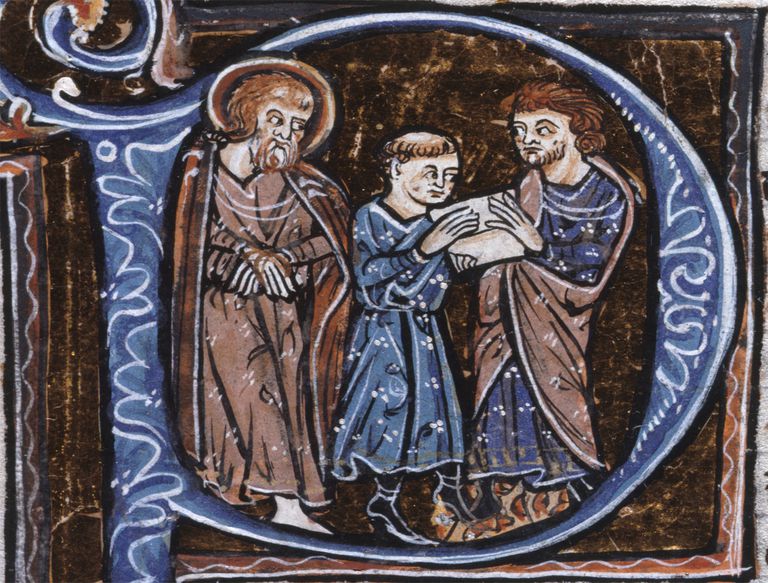
need to make himself a slave, letting go of everything for Jesus’ sake.  Take a minute to savor the irony:  The slave, Onesimus, comes home a free man in the love of Christ; while the free man, his master, Philemon, makes himself a slave in the love of Christ.  Philemon gives up everything, takes up his cross, and follows Jesus in the wonderful way of forgiveness.

          That way of forgiveness is also the way forward for you.  You can deal with those who sin against you like Philemon—on the basis of love.  For on the basis of love, God Himself has chosen to deal with you.  On the basis of love, the Son of God was born of the virgin Mary, suffered under Pontius Pilate, was crucified, died, and was buried.  On the basis of love, God reached out to name you and claim you as His own dear child in the water of Holy Baptism.  On the basis of love, Jesus takes your sins and has them all charged to His account, instead of yours.  He has paid for them in full.  On the basis of love, He draws near this hour to feed you personally with His body and blood for the forgiveness of sins.

          That calling, cleansing, feeding, forgiving love of God in Christ makes you what you are.  It defines you.  It equips and empowers you to do the impossible—to forgive the people who cause you pain—just as you yourself have been forgiven by our Savior.  The love of God changes you.  It makes you “useful” like Onesimus.  How many people long to be useful—to accomplish meaningful work?  Whatever you do in faith toward God and in fervent love for others—THAT is useful.  Those good works have eternal significance.  Our God makes the useless useful.  He makes the loveless lovely.

          I said earlier that reading Philemon is like arriving late for a movie; but it’s also like leaving the movie early.  We don’t actually know what happened when Onesimus returned home to Philemon’s house—walking up the driveway with nothing more than a letter from Paul in his hand.  There’s no tear-filled, heart-warming embrace before the music swells and the credits roll.  But that’s how it is in real life too.  How your attempts at peace-making and sin-forgiving will work out, no one can say for sure.  All we know is that as you head back out into this messy life, you carry the life of Jesus in your body.  On the basis of His love, you can press on with confidence and joy, knowing that your labor is not in vain—that in Christ you are useful.  You are loved.  You are forgiven.  You will live forever.

          In the name of the Father and of the Son and of the Holy Spirit.  Amen.

Monday, April 25, 2022

Like Newborn Babies

Jesu Juva

St. John 20:19-31                                                              

April 24, 2022

Easter 2B                                           

 Dear saints of our Savior~

          It’s a well-established fact that babies like to cry in church.  Or maybe it’s just that crying babies are more noticeable here.  But honestly, I wish I could conjure up a crying baby right now; because crying babies and screaming infants are at the heart and center of this Sunday after Easter.  A bawling baby would be the perfect object lesson for today.

          The traditional name for this Sunday after Easter is Quasi Modo Geniti, which in Latin means, “like newborn infants.”  It comes from today’s Introit, from 1 Peter 2:  “Like newborn infants, long for the pure spiritual milk [of the Word], that by it you may grow up to salvation.”  Quasi modo geniti—in the same way that newborn infants scream their little lungs out for their mother’s milk, so should we long for the sweet gospel of the forgiveness of our sins in Jesus Christ.  Just like little babies demanding to be fed—no matter what time of day or night it may be—that’s the way we all should crave and cry out for hearing the Word of the Lord, for receiving His absolution and His holy supper.  In other words, be a baby.  Show off your inner infant.  Demand what your pastor has been called to give you.  And don’t stop demanding it until you receive it.

          Of course, most of us know the term “Quasimodo” because that’s the name of the fictional hunchback of Notre Dame.  In the novel by Victor Hugo, a crying baby is discovered on the steps of the city’s cathedral on the Sunday after Easter.  But the infant is incredibly deformed, with a twisted face and a hunched back.  Not even his mother could love this grotesque child.  And so he is taken in by the church, baptized and named for the day on which he was found.  Quasimodo was raised within the confines of the cathedral to become its bell ringer—the hunchback of Notre Dame.  Only within the church could such a disfigured man find sanctuary and refuge.

          In today’s holy gospel, on the evening of that very first Easter, there were some other Quasimodos—real ones, not fictional—all desperately seeing sanctuary and refuge.  The tiny remnant of Jesus’ disciples huddled together behind locked doors as if they were abandoned babies.  Their spiritual condition was just like Quasimodo the hunchback.  Their performance as disciples had been grotesque.  In a twisted desire to save themselves, they abandoned their Lord when He was arrested—even after they had promised to die with Jesus if necessary.  They were acutely aware of their failures and deeply ashamed of their sin-deformed souls.  Like Quasimodo, they didn’t want to show their faces for shame.

          But into this room of distorted, disordered sinners, the Lord of Life appears.  The Lord Jesus comes to His disciples.  Does He chastise them for their failings and their fears?  Does He scold them for being fair-weather followers?  No!  But neither does Jesus ignore their sin.  Jesus absolves them.  He forgives them.  He pardons their transgression and remembers it no more:  Peace be with you, He says two times.  Peace, shalom, the peace that passes understanding which includes forgiveness, life and salvation.

          Jesus proclaimed peace; and then He showed them exactly what made
peace with God possible.  Jesus showed them His hands and His side—the very wounds by which healing comes—the wounds that satisfy the penalty for all the sins of all people.  His scars identify Him.  The risen Christ was also the Christ who was crucified.  This is no imposter—no ghost—no vision.  His Words and His wounds turn the disciples’ sorrow and shame to joy and peace.

          Every Sunday we gather here like the disciples did—a bunch of Quasimodos—hunched over and hideous in our sin.  Instead of standing up tall in faith toward God and in fervent love toward one another, our sin twists and curves us back in on ourselves.  It fills our hearts and minds with twisted, distorted priorities.  It is a grotesque love for ourselves that governs our thoughts and actions.  We are distorted, deformed, and disordered, which leads us to love the darkness and turn our backs on the light and love of Jesus.

          But Jesus came to seek and save the likes of us.  He doesn’t recoil over our horrid, grotesque condition, but—just like with Quasimodo—He receives us into His church and baptizes us.  He comes to us in love to bring us peace.  He deals with our sin head on by absolving us.  His Word of peace separates us from our sin and connects us to His perfect righteousness.  Just as He showed His hands and side to His disciples, so He gives us His body and blood to eat and drink for pardon and peace.

          But please note that Jesus didn’t just forgive these men and send them on their way.  He breathed on them and said Receive the Holy Spirit.  If you forgive the sins of any, they are forgiven; if you withhold forgiveness from any, it is withheld.  Amazingly, Jesus not only forgave His “hunchback” disciples; He ordained them:  As the Father has sent me, so I am sending you.  He made them instruments of His forgiveness to others.  He sent these poor absolved sinners out to absolve other poor sinners—in the stead and by the command of their Lord Jesus Christ. 

          We call this authority “The Office of the Keys,” and Jesus still uses it to deal with us today.  Even though pastors are a bunch of spiritual Quasimodos like everyone else, yet Jesus uses them to speak His absolution to others.  Forgiveness is God’s work to be sure; but God accomplishes that forgiveness through a Word placed in the mouth of a man.  Or if it helps you remember, think of God as a ventriloquist and the pastor as His dummy.  The words belong to Christ; the man who speaks them is just a mouthpiece of the Lord.

          Now, one more thing.  We can’t forget about Thomas—Thomas who wasn’t there when Jesus came—Thomas who missed out on the paschal pardon and peace of the risen Christ.  That’s what happens when you aren’t here in worship on any given Sunday.  You miss out on Jesus!  You miss out on the gifts He gives!  When the other disciples reported to Thomas that they had seen the Lord, Thomas didn’t believe it.  Unless I see in his hands the mark of the nails, and place my finger into the mark of the nails, and place my hand into his side, I will never believe.

          Eight days later the Risen Christ reappeared for the sake of His doubting, faithless disciple.  Jesus is the Savior of skeptics.  His Words and His wounds


have the power to convert the most dyed-in-the-wool doubters.  The words and wounds of Jesus lead Thomas to confess His newly created faith in the Christ:  My Lord and my God!  Skeptics, unbelievers, and doubters beware . . . the Risen Christ is coming for you next!

          The resurrection appearances of Jesus continue here among us on this Sunday, much as they did on that Sunday.  When Jesus came to His fearful disciples, He said, “Peace be with you.”  And from this altar, in just a few minutes, the minister whom God has sent to you will say, “The peace of the Lord be with you always.”  To Thomas, Jesus said, “Put your finger here, and see my hands.”  To you Jesus will say, “Take; eat.  This is my body which is given for you.”  To Thomas Jesus said, “Put out your hand, and place it into my side.”  To you this day Jesus will say, “Drink of it, all of you.  This cup is the new testament in my blood, which is shed for you for the forgiveness of sins.”  In this Holy Communion Jesus says, “Be not faithless, but believing.”

          And as you taste, touch and see that the Lord is good—as you receive the good gifts of Jesus—you are Quasimodos no more.  The sin that deforms and destroys you has been forgiven.  You are no longer hunchbacks, hidden and isolated.  You are healed, restored, and forgiven.  You are equipped to face the challenges that lie ahead.  You are blessed; for that’s what Jesus declares:  Blessed are those who have not seen and yet have believed.  Blessed are you. 

          In the name of the Father and of the Son and of the Holy Spirit.  Amen.


Monday, April 18, 2022

I Have Seen the Lord!

Jesu Juva

St. John 20:1-18                                                                    

April 17, 2022

The Resurrection of Our Lord              

Dear saints of our Savior~

Alleluia!  Christ is risen! . . . He is risen indeed!  Alleluia!

          I have seen the Lord!  With those words from the mouth of Mary Magdalene, Easter was unleashed.  Those words changed everything!  Without those words—without that proclamation—without the telling of that good news—the resurrection of Jesus would have been but a private affair involving only a select few followers.  But with those words, I have seen the Lord! Easter was unleashed to the ends of the earth.

          I have seen the Lord!  Those words started it all.  Every Easter sermon you’ve ever heard.  Every time you’ve stood at the graveside with the resurrection of Jesus as the beating heart of all your hope and joy.  You can trace that sweet comfort all the way back to Mary Magdalene.  She was the first.  Before Peter, James, or John would preach that Christ is risen—and long before Paul would preach that death has been swallowed up in victory—a woman named Mary declared:  I have seen the Lord!

          Mary Magdalene was no pastor—no preacher.  Mary was no apostle.  But as one church father said of her:  Mary was “the apostle to the apostles.”  She was the one who first brought the joyful news of Jesus’ resurrection to the men who would carry that good news to the ends of the earth.  Luther wrote:  This is something to ponder, that the Lord first appeared to Mary Magdalene, and it is something to consider that He first appeared to a woman.  It is a great comfort that women are the type of those who hear the gospel.  In these women there is a great unconquerable strength from the Word that stands firm against all the assaults of Satan. 

          Luther saw in Mary Magdalene a “great, unconquerable strength;” but that strength wasn’t so apparent in the predawn hours of that first Easter Sunday.  St. John gives us unique details about that morning—details that don’t emerge from the pen of Matthew, Mark, or Luke.  Mary was a devoted follower of Jesus.  Mary was a devoted supporter of Jesus, helping cover expenses for Jesus and the Twelve from her own means.  Mary Magdalene knew the wonder-working power of Jesus first hand.  For from Mary Jesus had once cast out seven demons.

          I’d like to think that Mary was an early-riser like me—that she was habitually up before the dawn’s early light.  But perhaps it’s more likely that she was up early because she couldn’t sleep—because sleep eluded her—because her heart had been shattered with pain and grief.  You see, Mary had been there on Good Friday.  When most of the other followers of Jesus had fled for safety, Mary Magdalene was there at the cross.  Nails, thorns, and spear could not deter her devotion to Jesus.  Mary made her way to the tomb early that morning because—in her grief—what else could she do?

          We’ve walked that same road of sleepless nights of sorrow.  We, too, have traveled to the graveside.  We’ve walked through the cemetery where every monument and marker stands as a tribute to the terrible truth that the wages of sin is death.  The soul that sins shall die.  But death comes not by God’s design.  Death was not a part of our Creator’s plan for His creation.  Death is an unwanted intruder.  Death is unnatural.  Death is the enemy—the last enemy to be destroyed.

          But Mary’s trip to the tomb was unlike any other.  Imagine her shock at seeing the stone rolled away from the entrance to the tomb.  She immediately goes to get Peter and John, who come running.  John, the younger, runs faster, but only peeks into the tomb.  Peter, the older, runs slower, but boldly barges right into the tomb to discover that the body of Jesus is gone.  And then Peter and John depart the tomb almost as quickly as they arrived—almost like they were fleeing the scene of a crime.  (Perhaps that’s what they thought!)  And Easter could have ended there, with just an empty tomb.  But an empty tomb proves nothing.  It’s cold comfort.  An empty tomb could be bad news, just as easily as good news.

          But Mary—quite contrary—stays at the tomb.  When the others leave, Mary stays.  Mary persists at the scene.  She had to know.  Locating her Lord—dead or alive—was all that mattered to Mary at that point.  When two angels ask her why she’s weeping, she answers:  They have taken away my Lord, and I do not know where they have laid him.  And even when a man whom she supposes to be the gardener asks her the reason for her tears, she again inquires about the location of her Lord.  Where is He?  She had to know. 

          And then comes one of the most touching scenes in the entire New Testament.  The Great Good Shepherd—the One who calls His sheep by name—He simply says:  Mary.  And in hearing those syllables from the Lord’s lips, Mary knows.  Christ is risen!  It’s a reminder that the Risen Christ knows you by name, as well.  It’s a reminder that this Jesus, who has destroyed death, will call you (by name) from your grave on the day of resurrection.

          In Albrecht Dürer’s depiction of this scene on the cover of today’s bulletin, it’s interesting that Jesus actually looks like the gardener.  He’s carrying a shovel


for crying out loud!  He’s wearing a wide-brimmed hat to keep himself cool from the warm rays of the rising sun.  But if you look closely at what Dürer gives us, there’s no doubt that this is the Lord.  Look at His hand.  Look at His foot.  Those nail holes are the identifying marks of Jesus Himself.  By those wounds we are healed.  In those wound is our forgiveness.  The risen Christ is the same Christ who was crucified, died, and was buried.  The Jesus who was crucified for our sins is the same Jesus who rose from the dead to open the kingdom of heaven for all believers.

          And Mary is the first one to witness this—the first one to see and embrace the risen Lord.  To Mary is given the high and holy privilege of taking this great good news to the other fearful followers of Jesus.  With joy, she can’t help but confess:   I have seen the Lord. 

          God’s ways are higher than our ways; His thoughts are higher than ours.  God’s priorities are not our priorities either.  Let’s face it, if you or I had written or directed the events of that first Easter morning, Mary certainly wouldn’t have been the one we would have cast as the first to encounter the risen Christ.  Mary hadn’t made any headlines up to this point.  We would have expected one of the Apostles or, if it had to be a woman, then Mary the mother of Jesus.  (That would have been something!)  But this is grace:  Jesus reaches down low to the one who appears to be the least of His followers and makes her the greatest—lifts her from obscurity to center stage—makes her the apostle to the apostles—honors her as the very first eyewitness of the very best news to ever be proclaimed by human lips:  I have seen the Lord!

          Mary Magdalene wasn’t a pastor.  She wasn’t ordained.  She wasn’t even a widely recognized leader among the disciples.  She likely was not the best educated or the most articulate follower of Jesus.  But because she had seen the risen Lord, nothing could stop her.  Nothing could deter the joy she had in telling the good news that Jesus Christ is risen from the dead.

          You too have encountered the risen Lord.  This is the place where Jesus Christ comes to meet you.  It’s why we gather here early in the morning, on every first day of the week.  Here we celebrate a “little Easter” every Sunday.  Here the risen Christ speaks to you as His promises are preached and proclaimed.  Here the risen Christ appears to you in the bread that is His body and in the wine that is His blood—bringing you the forgiveness of sins. 

          In the two thousand years since that first Easter morning, the Easter gospel has gone from Mary’s lips to the ears and hearts of people around the world.  And yet, there are people who live on this very block for whom Easter is little more than an excuse to overindulge in chocolate bunnies and jelly beans. And down through the centuries there’s been one technique that has worked better than all the rest for bringing outsiders inside the church.  It’s not flashy signs or wonderful websites.  No, what brings the outsiders in is when ordinary followers of Jesus—as ordinary as Mary of Magdala—invite them to come along. 

          Who, me?  You might not feel qualified.  You might not feel equipped to invite someone along to our weekly Easter observances.  I’m sure Mary didn’t feel qualified.  But God never calls the qualified.  He calls us—calls us by name in the water of Holy Baptism.  And then He sends us out to do the work of our callings and vocations.  And we do it all in light of the resurrection.  We know how this story ends.  We know that because Christ lives, we shall live also.  We know that our labor in the Lord is not in vain.  Thanks be to God who gives us the victory!  Alleluia, Christ is risen . . . He is risen indeed, alleluia!

          In the name of the Father and of the Son and of the Holy Spirit.  Amen.