In Nomine Iesu
St. Luke 2:1-20
December 24, 2016
Christmas Eve
Dear brothers and sisters in Christ Jesus~
And she brought forth her firstborn son, and wrapped him in swaddling clothes, and laid him in a manger; because there was no room for them in the inn. What would Christmas be without the manger? Most of us wouldn’t even know what a manger is if our Lord hadn’t been laid in one. Most of us have miniature mangers in our homes—one piece among many that gets carefully placed in the crèche every December. And inevitably there’s a baby Jesus who fits nicely into that little manger.
Here at Our Savior we have a real manger—a life-size manger—a manger from which real livestock could very possibly eat (although we’ve never actually tested it out with real livestock). Instead, we pull it out for nearly every children’s Christmas program. Many years ago, I recall, there was a bit of a dust-up regarding the manger. I was directing the program that year. And after our first rehearsal one little girl came up to me with a rather grave and grim look on her face. She reported her concern to me: “Pastor, there’s no baby in the manger. The manger is empty!”
Of course, I knew that. In my mind, there were thousands of other problems that needed addressing—costumes needed altering, lines needed memorizing, music needed practicing. I quickly offered an explanation to my concerned little girl: (Although I sounded a bit like the Grinch trying to get Cindy-Lou-Hoo to be quiet and go back to bed,) I told her that the manger was just a prop—that it was just there for “effect,” that even though she could see it was empty as she stood next to it, the people in the pews wouldn’t know the difference. So, let’s not worry about it, okay? “Pastor,” she said, “I have a doll at home and I could bring that to put in the manger.” Oh, that’s okay; you don’t have to do that. “I’ll bring my doll, Pastor, so that we can have a baby in the manger.” Well, by this point it was pretty clear to me that there was not going to not be a baby in the manger for that year’s Christmas program. And sure enough, for that year’s program, the manger was not empty, but occupied. There was a baby in the manger, and everything was right in the world.
As I look back now, that little girl was right to be concerned. An empty manger just won’t do. The fact that Jesus was once a baby like us is what Christmas is all about. The fact that God has a human body in Jesus—that Jesus was born of a woman—that Jesus wore diapers just like all of us once did—these things aren’t just insignificant details or theological trivia. This is the essence of the whole story. God in Christ was born like you—suffered like you—got hungry, sleepy and thirsty—was tempted like you in every way, but did not sin—was crucified, died and was buried, all for you. Your Savior became what you are, so that you can be what He is. This is the message of the manger; this is why we need babies in our mangers.
I regret the fact that, in my role as director of the Christmas program, I overlooked something very important. I had reduced and relegated the manger to nothing more than a prop—a prop designed to produce the intended effect—to conjure up the Christmas spirit and make a memorable Christmas program for everyone. Perhaps you’ve never directed a Christmas program; and perhaps you never will. But we all aspire to be award-winning directors. We all desire to manage and script how life plays out for us. We often see ourselves as both the star of the show and the director. And in our sinful quest for control over our supporting cast members, we are fond of using Jesus as our favorite prop.
Jesus becomes a prop in our lives when we use Him to achieve a desired effect. When we use our faith in Christ to make ourselves look good in front of others. When we portray ourselves as good and respectable and religious so that others will look up to us and admire us and say good things about us—then Jesus is nothing more than a shiny prop that helps us get what we want. When we piously promise other people, “I will pray for you,” but never actually get around to praying for them, we have used our faith as a prop—to make ourselves look good. Or when we use our faith as an excuse to sin—when we say, “Since I know that God will forgive me anyway, there’s no harm in crossing the line occasionally,” then too our faith in Jesus becomes just a prop to help us stage and direct our lives according to our own whims and desires. The always-quotable Shakespeare once wrote that “all the world’s a stage.” But one day this world will come to a halt for each of us. At that moment each of us will stand before the Christ and there will be no stage, no applause, no supporting cast, no props, no costuming, no make-up, and no script—just you and your sin and Jesus.
The only hope that you will have is the baby in the manger—who became the man on the cross. In the same way that we need the baby in the manger, we need the Christ on the cross. For the Christ on the cross—like the baby in the manger—isn’t just an insignificant detail or theological trivia—it is the essence of the story. This is why the Christ was born in Bethlehem—to save us from our sins—to pay for those sins with the offering of His own life. Both the manger and the cross are reminders of reality—the reality of our sin and the reality of God’s great love for sinners.
We spend so much time trying to direct and control and stage and script and pretend. But tonight, on Christmas Eve, reality breaks in—truth breaks in—God breaks in and He rearranges everything according to His grand and glorious script: Fear not: for behold I bring you good tidings of great joy, which shall be to all people. For unto you is born this day in the city of David a Savior, which is Christ the Lord. And in this show, written and directed by God, sinners are born again, death is destroyed, and everyone lives (by faith) joyfully ever after.
But in the Lord’s production, there are no props. You are not a prop or a minor player or a tiny pawn in God’s great plan. You are the object of His love and affection. The baby in the manger and the Christ of the cross are the essence of God’s great plan for you—to save you, and to have you as the apple of His eye, and to give your life eternal significance. You don’t have to be an actor when you come here to church. You don’t have to pretend to be something you are not. For Christ Jesus came into the world to save sinners. He came to seek and save the lost and the least and the lowly. His power is made perfect in your weakness. He meets you where you are—bringing you forgiveness for your sins and resurrection life.
Jesus is no longer in the manger; although that was critically important for your salvation. Jesus is no longer on the cross; although that was critically important for your salvation. And we don’t hesitate to portray Him in the manger or on the cross—because the Word became flesh and dwelt among us. Here in the church is where the Christ is to be found. Here in the church where His promises are proclaimed—this is where the Savior’s arms are opened wide to receive you. Here in His church He claims sinners as His own family in the splash of baptism. Here the Christ of Christmas feeds us with the bread that is His body and the wine that is His blood. Here Christ comes whenever two or three gather in His name.
The manger and the cross tell the whole story tonight. They tell your story on this Christmas Eve—that you are loved and forgiven—that you are not alone. God has a plan for you. The scenes that come and go in your life are not random or haphazard. They are not meaningless. Your days and your deeds have been lovingly sketched and scripted and blocked-out by the God who knit you together in your mother’s womb. When you leave here tonight it won’t be to go home and direct the world’s most perfect Christmas. No, when you leave here you step onto God’s stage, where there are no minor parts, no bit players—but sinners redeemed by Christ the crucified—men and women who are the light of the world. So ponder that in your heart this Christmas. Glorify and praise God for all that you have seen and heard. The baby in the manger is the Christ on the cross—a Savior, who is Christ the Lord.
In the name of the Father and of the Son and of the Holy Spirit. Amen.
Wednesday, December 28, 2016
Monday, December 19, 2016
A Bad News Christmas
In Nomine Iesu
St. Matthew 1:18-25
December 18, 2016
Advent 4A
Dear brothers and sisters in Christ Jesus~
Pregnancy, as we know it, is usually greeted as good news. Those nine months are precious times—usually filled withexcitement, anticipation, and even a few baby showers. Back in the day, baby showers were purely feminine affairs. Men were not invited and were thankful not to be. The delicate desserts, the dainty decorations, the silly games—it’s not the kind of afternoon that most men aspire to. Let the dad assemble the crib or rip out the carpeting in the new nursery and he’ll be happy with that. Because most pregnancies are meant to be happy occasions in life.
But not every pregnancy is a happy occasion in life—or so it seems. Not every child conceived seems like good news, at first. Your teenage son or daughter manages to master the skill of making a baby—even though they haven’t managed to acquire a high school diploma quite yet, and marriage is out of the question. When children have children—when abortion comes to be seen as an attractive option—when grandparents start to wonder if they will have to adopt their own grandchild—well, those kinds of pregnancies and those kinds of babies can be discouraging and hard to bear.
And, for those difficult and troubling pregnancies, we have today’s gospel reading from Saint Matthew. Thank God for Matthew and his Christmas account which addresses the darker side of Christmas. In his Christmas account there’s certainly no baby shower, John doesn’t leap in his mother’s womb, and expectant mothers don’t break out in song. Instead, what Matthew sets before us is a difficult situation. Joseph and Mary are engaged. Joseph has been good; he hasn’t slept with Mary. He’s done his part. But, oh, the darkness. Mary’s pregnant. What now? You better believe that Joseph suffered through many sleepless nights of heartache and disappointment. Perhaps Mary wasn’t who he thought she was. The ideal family he hoped for might never be. The best he could do was send her off to live with a relative and cancel the wedding.
Joseph seems like a man who wanted to do the right thing. We don’t know how he and Mary became engaged. It was probably arranged by the respective families. We don’t know whether they were “in love” or not, but that’s a modern concept. People didn’t marry on the basis of romantic love in those days. Matthew tells us that Joseph was “a just man.” But he was also a reasonable and sane man. He knew that virgins don’t get pregnant. Joseph was a builder from Nazareth, a businessman who operated in a world of income and expenses, blueprints and tools, algebra and geometry. He wasn’t some superstitious country-bumpkin. He knew that virgins don’t conceive, no matter how religious-sounding their explanation might be.
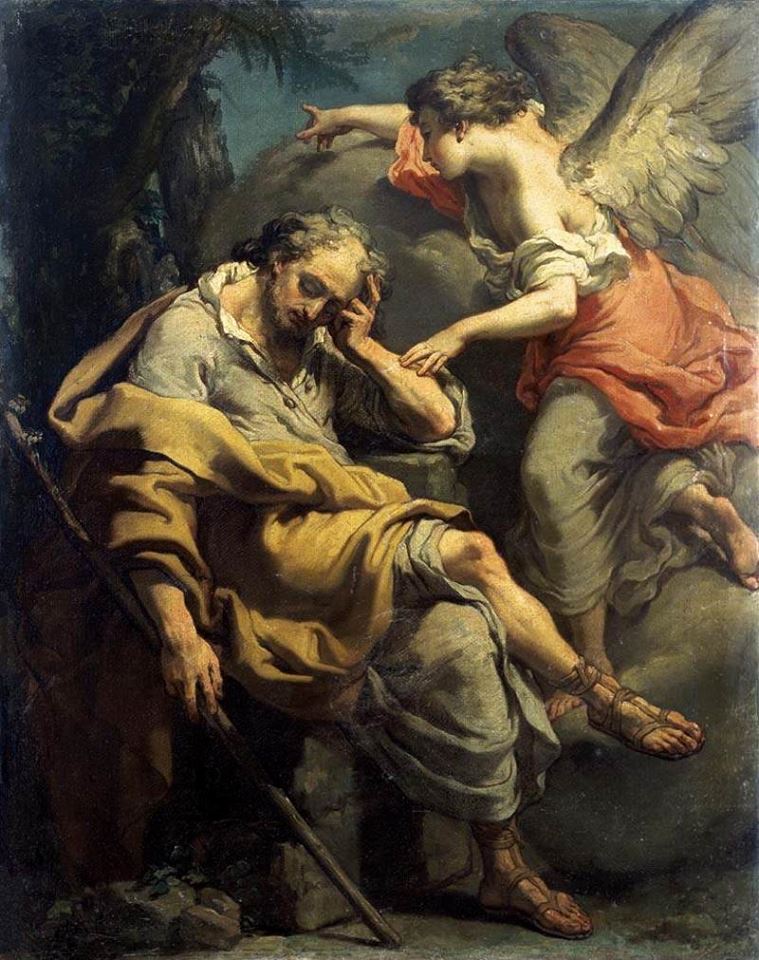
Into Joseph’s despair and darkness the Word of God gets delivered by an angel of the Lord. It would take the Word of the Lord for Joseph to overrule his reason and his senses, not to mention his common sense: “Joseph, son of David, do not fear to take Mary as your wife, for that which is conceived in her is from the Holy Spirit. She will bear a son, and you shall call his name Jesus, for he will save his people from their sins.”
Yes, that’s why Jesus came—to save His people from their sins. Those sins threaten to separate us from God eternally. Those sins—our sins—are what dims this world into perpetual darkness. Sometimes our sins produce self-inflicted wounds. Sometimes those around us get sucked in. Sometimes innocent people suffer for what we’ve done or what we’ve failed to do. This ugliness of sin—this depressing darkness—is why Jesus came. He came to save us from our sin and its deadly wages. Jesus didn’t come to shine a twinkling star on a moonlit night, or to lead us in joyful song, or to be a good excuse to roast chestnuts on an open fire. He came to people in mourning—to people in dark and difficult situations—to sinners—to you—to save you from your sins. See how much God loves you!
Matthew makes it clear that the Lord’s plan to save you had been around for a long time. There was a prophecy buried deep under about 700 years of Israelite dust—the prophecy of Immanuel. As you heard in today’s OT reading, that prophecy was first spoken to faithless King Ahaz. And even though Ahaz didn’t want a sign from the Lord, the Lord gave him one anyway: “Behold, the virgin shall conceive and bear a son, and they shall call his name Immanuel (which means, God with us).” To make a long story short, Ahaz rejected the sign offered by the Lord. Ahaz didn’t trust the Word of the Lord. And Ahaz went down to swift destruction.
That prophecy of Immanuel laid dormant for centuries, like a forgotten seed planted in the soil. But when God speaks—when God makes a promise—He never forgets it. And one marvelous day a smiling angel appeared to a young virgin named Mary, who was betrothed to Joseph. And the angel said, “Guess what, Mary? You’re it. The Lord is with you. Immanuel!” God is with us. The Word has become flesh in the womb of a virgin. His name shall be Jesus. He will save his people from their sins.
Mary believed it; and Joseph believed it too. That’s the real Christmas miracle! Joseph believed; and Joseph acted according to what he believed. As you may know, there isn’t a single syllable from Joseph’s mouth recorded in the Bible. Joseph is silent in the Scriptures. Mary sings her Magnificat, but Joseph has no song. He shows his faith by what he does. His actions speak louder than words. “He did as the angel of the Lord commanded him.” He took this pregnant teenager home as his wife. He gave the child the name Jesus, as directed by the angel. He raised that child as his very own. Joseph is a picture of faith in action. When God’s Word and his own “common sense” didn’t agree, Joseph trusted the Word. He believed it. He did what it says.
You also have the Word of the Lord delivered to you—applied to your life—by a messenger sent from God. I’m no angel; and this is no dream. But I am a messenger sent by God to you. Today the Word of God comes to you, calling you to do what Joseph did—to live in the obedience of faith—to live in the light of your baptism—to say “no” to all sin and ungodliness. In Matthew’s version of Christmas, things are messy and complicated because of sin. So will your Christmas be this year—messy, complicated, corrupted by your sin and its wages.
But the Word of the Lord is at work in you. That Word intrudes, it inconveniences, it rearranges things, it forgives sin. A virgin bears a Son. That Son, Jesus, dies and rises from the dead, bearing your sins away. With God—and with His Word—nothing is impossible. Sinners are forgiven. And the dying depart this life in peace to be with Christ—awaiting the resurrection of the body. Nothing is impossible with God.
Jesus comes. He is “Immanuel,” God with us. He comes in the water of your baptism. He comes in the bread and wine of His holy supper. He comes to save you from your sin. Mary actually was a Virgin. But our Lord also comes for those who aren’t—those who have made sinful and selfish choices. That story isn’t so pretty; nor does it inspire singing or decorations. But this is the Christmas Saint Matthew gives us. This is the Christ who comes even when pregnancy is not good news. This is the Christ who comes into a world where Herod and his allies still slaughter little babies. The Christ was born to die—precisely for the likes of us. He didn’t come so that people would put up fake, plastic trees, but He did come to hang upon a tree that was stained with His own sweat and His own blood. He came to bring genuine good news into a bad news world.
Saint Luke—he gives us the Christmas we want—where Mary sings for joy and where angels fill the sky and where shepherds marvel at the manger. We love it and we’ll hear about it this afternoon from the children. But Saint Matthew—he gives us the Christmas we need. And even in our darkest days, we can still say, “Thank you” and “Alleluia.” Amen.
Monday, December 5, 2016
Beasts Made Beautiful
In Nomine Iesu
Isaiah 11:1-10
December 4, 2016
Advent 2A
Dear brothers and sisters in Christ Jesus~
In the earliest years of my childhood there were two television programs that I watched regularly. One, of course, was Sesame Street. The other was Mutual of Omaha’s Wild Kingdom. These two programs were very different. One program featured creatures like Big Bird and Snuffolufogas learning to live together peacefully on the streets of an urban neighborhood. Whereas Wild Kingdom featured creatures like leopards and lions hungrily feasting on the bloody entrails of some unlucky zebra or gazelle, somewhere in the African Serengeti. The contrast between these two shows couldn’t have been starker.
What I didn’t realize at the time was that Marlin Perkins was actually teaching me more about the real world than Grover and Cookie Monster ever could. Sesame Street never mentioned anything about sin. For that matter, Marlin Perkins never said the word either. But every time I saw a wolf pack ripping some little bunny to shreds—every time I saw the crimson face of a lion snacking on the innards of a baby water buffalo—every time I saw a cobra sink its fangs into some cute, fuzzy mammal and then swallow the mammal whole—what I was seeing was the unmistakable evidence of the fall into sin.
Originally, in the beginning, before the fall into sin, these beasts were harmless and posed no threat whatsoever to Adam and Eve. Even the biggest and fiercest creatures were ruled and dominated by our first parents in Paradise. Predator and prey were terms you would not find in the dictionary of the Garden of Eden. But since that fateful day in Genesis chapter three, wolves, bears and lions are largely untamed. They are wild—outside of our control and dominion. If you get attacked by a bear, it’s nothing personal. Don’t be offended. Bears and other predators live by instinct, not by conscience. They prey on the weak. They fight to survive. It’s what they do. Back them into a corner or, say, threaten their offspring, and prepare to have claws and jaws aimed at your throat. The theme of this fallen creation is not “live and let live,” but rather, “kill to live.”
Sadly, the laws of the jungle don’t only apply to the predators and prey of the planet, but also to the people of the planet. For what the wolf does to the lamb and what the lion does to the fattened calf is also what we do to those around us. We don’t do it with fangs and claws, mind you, but with our words and actions. It really doesn’t take much provoking for us to rip apart the lives of others. We regularly sink our fangs into those who get in our way and inconvenience us. We chomp down on the bones of those who dare to cross our paths. For what the cat does to the mouse is what we do to those around us on a regular basis—friends, family members, innocent bystanders, it matters not. As we view the world through the lenses of our sinful nature, it’s clear: I’m always right, and everybody else is always in the wrong place at the wrong time, fully deserving all the puncture wounds we can inflict with our words and deeds.
The painful truth is that we’re much worse than the animals. Isaiah makes that clear in chapter one where he writes, “The ox knows his master, the donkey his owner’s manger, but Israel does not know, my people do not understand” (v.3). The ox and ass have things figured out. The wild animals are wise compared to us. To describe our behavior as beastly is actually an insult to the beasts! At least nature’s carnivores kill for their own survival. In the human world, unborn babies can be brutally murdered for nearly any reason at nearly any time of development. In the human world, we rip apart reputations just to make ourselves look good by comparison. In the human world, we bear our fangs purely for reasons of revenge and retribution. The “human” world is actually much less “humane” than the wild kingdom. Inside each of us is a wild, beastly, sinful creature. It cannot be domesticated, placated, or tamed. It must be killed.
This is what Advent is all about—killing the beast within. This is what John the Baptist meant when he preached repentance, calling the scribes and Pharisees a brood of vipers when they came after him with their fangs in full view. Advent is about Jesus—about the Son of God coming right into this hellish God-forsaking zoo of a world—stepping right into the lions’ den—right into this wild kingdom. Jesus came precisely for wild and untamed sinners like us. Jesus came to seek and save us beasts, to give us the beauty of His own righteousness.
When Isaiah first preached about the Messiah coming into our wild, wild world, it must have seemed pretty unlikely; in fact, darn near impossible. Isaiah preached that the coming Savior would be like “a shoot from the stump of Jesse.” You remember Jesse, don’t you? Jesse, the father of King David? God had promised David that his kingdom and his throne would be established forever (2 Sam. 7:16). But right about the time Mary and Joseph were encountering all those “no vacancy” signs in Bethlehem, David’s throne had been unoccupied and gathering dust for nearly five centuries. David’s kingdom had long ago been mowed down by the Babylonian chain saw wielded by Nebuchadnezzar; and only a dead stump remained. But from the remains of that dead stump sprouted David’s greater Son—David’s greatest Son—the Son of God—the Son of Mary—our Savior.
Isaiah said that the Savior would come to judge. But He doesn’t judge by what He sees with His eyes or hears with His ears. He judges you, Isaiah says, with righteousness. And even though you are guilty, for your sake He takes the blame. For your sake, the rod of punishment leaves welts and bloody furrows on His back. The belt of righteousness around His waist, the belt of faithfulness around His loins—these He removes from Himself and lovingly wraps them around you. You through faith become what He is; as He becomes what you are. You switch places, so that all the good He has becomes yours; and all the bad you have becomes His. As Isaiah looked ahead to Good Friday, he expressed the Savior’s work like this: He was wounded for our transgressions; he was crushed for our iniquities . . . and with His stripes we are healed.
This great exchange—this sacred substitution—transpires here in His church. Here in the church of Jesus Christ there’s always more than meets the eye. For as my eyes scan the pews this morning, I see sinful beasts—lions and tigers and bears (oh, my). Yet at the same time, I see something glorious: baptized beasts—sinners defanged and declawed by confession and absolution—souls redeemed by Christ the crucified—living together, loving together, serving and sacrificing together, witnessing as one. Here in the church, already today, the wolf dwells with the lamb, the leopard with the goat, the cow and the bear, the lion and ox, all of them hanging out together without fear of harm or destruction—led by the little child born in Bethlehem, David’s Son and David’s Lord.
Ultimately, of course, this life we share together in the church is a preview of heaven—the life of the world to come. And that heavenly life is less about harps and halos, and more about a return to Paradise—a restoration of what Adam and Eve enjoyed before they sinned and died. In paradise there will be no predators and no prey. No sin and no death. Just the good company of the Creator and His creatures, living in perfect harmony.
But between now and then, of course, you have to head back out into that wild kingdom we call planet earth. It’s a dog-eat-dog world out there. But as you head out, remember this: the Lord Jesus has chosen you (of all creatures) to be His own, to bless you with His blood-bought forgiveness and His resurrection life. He has washed you and welcomed you into His holy family. He has fed you and clothed you with the beauty of His own righteousness. You are a beast made beautiful by the Lord Jesus Christ. Amen.
Saturday, December 3, 2016
Witness with Andrew
In Nomine Iesu
St. John 1:35-42a
November 30, 2016
Midweek Advent 1
Dear brothers and sisters in Christ Jesus~
You’ve probably never heard a sermon centering on Saint Andrew. I’ve never preached such a sermon. His feast day—today—falls at a time of year when our focus is firmly fixed on other things. Frankly, there’s not a lot of biblical material to work with where Andrew is concerned. When I opened my Anchor Bible Dictionary to the entry on Andrew, I found a one-page article; and the first sentence was this: “The NT shows little interest in Andrew.” That sounded a bit harsh. But the article went on to explain that while Andrew is mentioned a dozen times in the NT, most of those times he’s simply listed along with the other apostles. He speaks two sentences. One of them you just heard: “We have found the Messiah.” The other line comes in John 6 where Andrew mentions how five barley loaves and two fish won’t be nearly enough to feed a crowd of thousands. It’s true—the NT shows little interest in Andrew.
By contrast, the NT is very, very interested in Andrew’s brother, Peter. Peter’s escapades are splashed across page after page—not to mention First and Second Peter, the two epistles written by Peter. It was Andrew’s impetuous brother, Peter, who walked on water at the invitation of Jesus. It was Peter who confessed that Jesus was the Christ, the Son of the Living God. It was Peter who beheld Jesus in the glory of His transfiguration and then offered to set up tents for Jesus, Moses, and Elijah. It was Peter who cut off the ear of the High Priest’s servant, Peter who denied Jesus three times, Peter to whom Jesus said, “Feed my sheep,” Peter who preached a Pentecost sermon after which three thousand were baptized and added to the church of Jesus Christ. Andrew, it would seem, pales in comparison to his brother, Peter.
Or so it seems, unless you take seriously our text tonight. For there we learn that Andrew had been one of John the Baptist’s disciples, along with some unnamed, anonymous guy. And when these two saw John the Baptist point his prophetic finger at Jesus and declare, “Behold, the Lamb of God,” Andrew and the other guy followed Jesus. Andrew and the other guy spent a day with Jesus. And at the end of that day Andrew tracked down his brother, Peter, and said to him, “We have found the Messiah.” And immediately Andrew brought his brother to Jesus. Andrew was the first of Jesus’ disciples. Andrew was the first missionary—the first person to bear witness to Jesus as he brought along his brother to see and hear the Savior.
What if he hadn’t? What if Andrew had never gone to Peter and said, “We have found the Messiah?” What if Andrew had never brought brother Peter into the presence of Jesus? Perhaps Peter would never have been an apostle. It’s speculation, of course, but if Andrew had kept his brother in the dark concerning the Light of the World, there would have been no Peter walking on water, no Peter on whose rock solid confession of Christ the church would be built, no Peter proclaiming Jesus as the crucified and risen Messiah on the Day of Pentecost. Without the witness of Andrew, the New Testament would be a very different document.
Will you witness with Andrew? Remember how there was another anonymous, unnamed disciple together with Andrew? There’s lots of speculation about who that other guy was—lots of interesting theories. But I, personally, like to think that that unnamed partner of Andrew is unnamed for a reason—that the Holy Spirit wants you to see yourself as a partner of Andrew—a partner in discipleship, and a partner in bearing witness to Jesus, the Messiah.
When Andrew looked Peter in the eye and said, “We have found the Messiah,” he had no idea of the fruit that those words would bear. When Andrew ushered Peter into the presence of Jesus, there’s no way he could have fathomed how that simple act of witness would impact the history of the world and the church. But then again, that’s how it is every time you bear witness to Jesus—every time you speak of the hope that you have in Jesus—every time that you invite someone to come with you here into the Savior’s presence. You never know what the results might be. The results aren’t something you can control. The results of your witness depend primarily upon the work of the Holy Spirit; and not upon you.
Will you witness with Andrew? Most of us would object that we’re not knowledgeable enough about Jesus to bear witness about Him to others. But you know a lot more than Andrew did! What did Andrew know about Jesus? He heard John call Him the Lamb of God, and Andrew had spent less than 24 hours with Jesus. Andrew hadn’t seen even one miracle performed by Jesus. Andrew’s concept of “Messiah” probably had more to do with political victory than it did with suffering, shame, and crucifixion for the sins of the world. Witnessing doesn’t depend on having an answer for every question or having a PhD in theology. Andrew himself likely had more questions than answers; but that didn’t stop him from telling his brother, “We have found the Messiah,” and then bringing his brother to that Messiah.
Will you witness with Andrew? If so, to whom will you witness? Thank about that. Andrew went to a family member—a brother he knew better than anyone. Who do you know and love that has distanced themselves from Jesus and His church? The odds are that you have no shortage of family and friends who are not receiving what Jesus wants to give them. Far better to aim your witness at those you know than to go out ringing random doorbells. You probably wouldn’t say what Andrew said, “We have found the Messiah.” But you might say that Jesus has found you, and loved you, and made all the difference in your life—that He has given your life meaning, direction, hope, comfort, and eternal significance . . . or whatever seems right to you.
And then you bring them to Jesus—you invite them to come here with you. By my count there are something like 10 services happening here between now and January 1st. Invite someone to the children’s Christmas program. Invite someone to Evening Prayer. Because, when you witness with Andrew, the results don’t depend on you. What are you afraid of? What’s stopping you? What do you have to lose? Whose life might you change—forever—with a simple invitation?
You have found the Messiah, the Lamb of God. Or, more accurately, He has found you and forgiven you—named you and claimed you in the cleansing splash of your baptism. He took on our human flesh and was born of the Virgin Mary. By His death on the cross all of our sin has been answered for. And by His resurrection from the dead we know that our present sufferings don’t even begin to compare with the glory that will be revealed in us. Sharing the hope that you have—witnessing with Andrew—you don’t know the results and you won’t know the results . . . not until you stand with all the redeemed around the throne of the Lamb—together with Peter and Andrew and all the other saints like you—valuable, precious, died-for, and loved. Amen.
Monday, November 28, 2016
Advent Epistle 2016
Monday of Advent 1
November 28, 2016
Dear Saints of Our Savior,
Another Thanksgiving has come and gone—and the crush of the rush to Christmas is now underway.
But in the church’s reckoning of time, it’s not yet Christmas; it’s Advent. Advent is the antidote to the crush and rush of cultural Christmas. Advent is the season for pondering the promises of our gracious God. Advent is when we stop rushing and start reflecting on where we have been and where we are headed—all by the mercies of Christ, our Savior.
This year our congregation is offering four special midweek opportunities to do just that. Each Wednesday during Advent we will gather at 6:30 p.m. for Evening Prayer. Because nearly each of these Wednesdays aligns with a minor festival this year, we will take our cues from these “minor” saints who bore witness to Christ in “major” ways. We will briefly examine their lives through the lens of Advent—drawing direction and definition for our own lives as Christ’s holy people.
November 30 ~ Saint Andrew, Apostle Witness with Andrew
December 7 ~ Saint Ambrose of Milan, Pastor & Hymnwriter Sing with Ambrose
December 14 ~ Saint Lucia, Martyr (observed) Die and Live with Lucia
December 21 ~ Saint Thomas, Apostle Believe with Thomas
Each of these midweek services will be preceded by a meal in the fellowship hall, beginning at 5:30 p.m. You are invited to bring a side dish, salad, or dessert to share—although no culinary contribution is required. Just come and enjoy the good company of other “ordinary saints,” drawn to the light of Christ during the darkness of December.
Jesus Christ is the light of the world—the light no darkness can overcome.
Thanksgiving in the Midst of the Mess
In Nomine Iesu
Ephesians 5:3-5
November 24, 2016
Thanksgiving Day
Dear brothers and sisters in Christ Jesus~
Today’s sermon text is comprised of three brief verses from Ephesians chapter 5:
But sexual immorality and all impurity or covetousness must not even be named among you, as is proper among saints. Let there be no filthiness nor foolish talk nor crude joking, which are out of place, but instead let there be thanksgiving. For you may be sure of this, that everyone who is sexually immoral or impure, or who is covetous . . . has no inheritance in the kingdom of Christ and God (v.3-5).
Sounds like a strange text for Thanksgiving, doesn’t it? If it’s your custom to show up here on the fourth Thursday of November, then there are certain things you’ve come to expect. You can be confident that we will sing “Now Thank We All Our God.” There will be a bountiful display of fruits, veggies and grains adorning the chancel. And Jesus will heal ten lepers; but only one will return to give thanks. That you expected and that you have received.
It’s also customary around here on Thanksgiving to be reminded of God’s First Article gifts, the daily bread that our heavenly Father provides: clothing and shoes, food and drink, house and home, wife and children. And those First Article gifts ultimately point us to the Second Article gifts: the forgiveness of sins, life, and salvation that our Savior won for us by His suffering, death, and resurrection. Those are gifts that money can’t buy—undeserved gifts that come to us by the grace of God. Giving thanks for these gifts is what we Christians do—not just on this national holiday, but every day. And this is what you came here today expecting to hear.
What you probably didn’t expect to hear about today were sexual immorality, filthy talk, and crude joking. Yet, as St. Paul penned the verses you just heard, he plopped in the word “thanksgiving” right in the middle of a list of prohibitions and warnings about unholy words and actions: sexual immorality, impurity, crude joking, and the like. “Instead,” Paul writes, “let there be thanksgiving.” He gives us a warning, and—right in the middle of that warning—he gives us a prescription: “Let there be thanksgiving.” We need to heed both—both the warning and the prescription.
First of all, the warning: Good works don’t make you good or holy; only the good work done by Jesus, received through faith, can make you good and holy. Bad works, however, always undermine your faith in Jesus. Bad works like sexual immorality and filthy talk can eat away at your faith, like termites in your foundation—like cancer on healthy tissue and bone. Bad works can eventually cause you to lose your faith in Jesus! It’s not that sexual immorality and crude language are unforgiveable sins. But Paul is clear that these sins can weaken and undermine your faith over time, and leave you with no inheritance in the kingdom of Christ.
Most of the Christians at Ephesus had been converted from paganism. Much of their former lives had been spent entangled in various forms of idolatry and gross immorality. They were constantly being tempted and pulled back into their former way of life. Paul essentially tells them what he also tells us: That’s not who you are! You are pure. You are holy. You are saints redeemed by the blood of the Lamb. Have nothing to do with the filth of the culture which surrounds you on every side. That’s the warning.
Then comes the prescription: Instead let there be thanksgiving. Right in the middle of this listing of filthy deeds and words comes this one holy word and deed: Thanksgiving. As you sit here this morning surrounded by a culture that lives and breathes sexual immorality—as you sit here this morning pulled and tempted and seduced to sample from that smorgasbord of impurity—the simple prescription is thanksgiving.
But this word, thanksgiving, doesn’t merely refer to the act of being thankful. It means more than that; it has to. I mean, anybody can be thankful. Think about it: Meth dealers can be thankful for brisk sales of their product. Greedy misers can be thankful as they count up their coins. Abortionists can be thankful for ridding the world of unwanted babies. Being thankful isn’t an exclusively Christian concept.
But by the time Paul wrote to the Ephesians, the word translated “thanksgiving” had begun to take on a bigger meaning. The actual Greek word is eucharisto—from which we get “Eucharist,” another name for Holy Communion. A little later in the same chapter Paul uses the same word (giving thanks) to describe what goes on in the Divine Service, as we sing and make melody to the Lord with Psalms, hymns, and spiritual songs (v.19-20). In other words, when Paul prescribes “thanksgiving,” what he means is the thanksgiving that takes place here. When he writes, “Let there be thanksgiving,” what that means is, “let there be worship.” His prescription is praise and hymn-singing and promise-hearing, and, yes, even the Eucharist itself—the body and blood of Jesus for the forgiveness of our sins.
Thanksgiving, therefore, isn’t just a thankful feeling for all that’s good in our lives. No, thanksgiving is what we do because Jesus has rescued and delivered us from all that’s bad in our lives. THIS is Thanksgiving! Singing God’s praises and receiving His gifts, including, especially, the Eucharist—the bread that is His body and the wine that is His blood. Are you surrounded by immorality? Let there be thanksgiving! Are you tortured by temptation? Let there be thanksgiving! Have you failed to lead a sexually pure and decent life? Let there be thanksgiving . . . because thanksgiving is worship.
Thanksgiving is when the Lord Jesus plants and plops Himself right in the middle of your sinful, sorry life and gives you His gifts of healing and hope and joy in His salvation. He loves to be here among you as you gather in His name. He comes specifically to save sinners. And on the cross He stood-in as the substitute for every sinner—taking your place, and giving you His place as a child of God.
It’s likely that Paul knew the Christians at Ephesus better than he knew any other congregation. Paul had spent nearly three years living among them—much more time than he spent with any other church. He had taught them and catechized them. He had absolved them. He had preached to them. He had presided at their altar and served them with the Eucharist—the body and blood of Jesus. Paul was a pastor to them. He knew how Satan was targeting them and tempting them. He knew their vulnerabilities and weaknesses. This is why Paul didn’t merely tell them to “count their blessings.” There’s nothing wrong with that; but they needed more, and so do we.
Paul said this: “Let there be thanksgiving.” Surrounded by sin and its wages, let there be thanksgiving. Let there be worship. For where there is worship, there is Jesus. Only Jesus can pull you out of the immorality that surrounds you. Only Jesus can cleanse you and purify you from the filth of your own sin. And Jesus doesn’t do partial-purifying. He doesn’t forgive halfway and then say, “Now you earn the rest.” His cleansing is complete. His forgiveness is full. His absolution . . . is absolute.
Perhaps Paul’s warning against immorality, and his prescription for thanksgiving, are best understood in terms of feasting. After all, today is a day of feasting. More calories will touch your lips today than on most days. Paul’s warning is not to sully and soil our lips and bodies with sexual sins and filthy language. Those things will bring death to you. Instead let there be thanksgiving. Instead, let your lips and bodies be purified with the cleansing body and blood of Jesus in the feast of the Eucharist. For when these gifts touch your tongue, that is thanksgiving. That is Jesus for you. And His feast—the feast of the Lamb—is a feast that has no end—as you will see for yourself soon enough. So let there be thanksgiving!
In the name of the Father and of the Son and of the Holy Spirit. Amen.
Ephesians 5:3-5
November 24, 2016
Thanksgiving Day
Dear brothers and sisters in Christ Jesus~
Today’s sermon text is comprised of three brief verses from Ephesians chapter 5:
But sexual immorality and all impurity or covetousness must not even be named among you, as is proper among saints. Let there be no filthiness nor foolish talk nor crude joking, which are out of place, but instead let there be thanksgiving. For you may be sure of this, that everyone who is sexually immoral or impure, or who is covetous . . . has no inheritance in the kingdom of Christ and God (v.3-5).
Sounds like a strange text for Thanksgiving, doesn’t it? If it’s your custom to show up here on the fourth Thursday of November, then there are certain things you’ve come to expect. You can be confident that we will sing “Now Thank We All Our God.” There will be a bountiful display of fruits, veggies and grains adorning the chancel. And Jesus will heal ten lepers; but only one will return to give thanks. That you expected and that you have received.
It’s also customary around here on Thanksgiving to be reminded of God’s First Article gifts, the daily bread that our heavenly Father provides: clothing and shoes, food and drink, house and home, wife and children. And those First Article gifts ultimately point us to the Second Article gifts: the forgiveness of sins, life, and salvation that our Savior won for us by His suffering, death, and resurrection. Those are gifts that money can’t buy—undeserved gifts that come to us by the grace of God. Giving thanks for these gifts is what we Christians do—not just on this national holiday, but every day. And this is what you came here today expecting to hear.
What you probably didn’t expect to hear about today were sexual immorality, filthy talk, and crude joking. Yet, as St. Paul penned the verses you just heard, he plopped in the word “thanksgiving” right in the middle of a list of prohibitions and warnings about unholy words and actions: sexual immorality, impurity, crude joking, and the like. “Instead,” Paul writes, “let there be thanksgiving.” He gives us a warning, and—right in the middle of that warning—he gives us a prescription: “Let there be thanksgiving.” We need to heed both—both the warning and the prescription.
First of all, the warning: Good works don’t make you good or holy; only the good work done by Jesus, received through faith, can make you good and holy. Bad works, however, always undermine your faith in Jesus. Bad works like sexual immorality and filthy talk can eat away at your faith, like termites in your foundation—like cancer on healthy tissue and bone. Bad works can eventually cause you to lose your faith in Jesus! It’s not that sexual immorality and crude language are unforgiveable sins. But Paul is clear that these sins can weaken and undermine your faith over time, and leave you with no inheritance in the kingdom of Christ.
Most of the Christians at Ephesus had been converted from paganism. Much of their former lives had been spent entangled in various forms of idolatry and gross immorality. They were constantly being tempted and pulled back into their former way of life. Paul essentially tells them what he also tells us: That’s not who you are! You are pure. You are holy. You are saints redeemed by the blood of the Lamb. Have nothing to do with the filth of the culture which surrounds you on every side. That’s the warning.
Then comes the prescription: Instead let there be thanksgiving. Right in the middle of this listing of filthy deeds and words comes this one holy word and deed: Thanksgiving. As you sit here this morning surrounded by a culture that lives and breathes sexual immorality—as you sit here this morning pulled and tempted and seduced to sample from that smorgasbord of impurity—the simple prescription is thanksgiving.
But this word, thanksgiving, doesn’t merely refer to the act of being thankful. It means more than that; it has to. I mean, anybody can be thankful. Think about it: Meth dealers can be thankful for brisk sales of their product. Greedy misers can be thankful as they count up their coins. Abortionists can be thankful for ridding the world of unwanted babies. Being thankful isn’t an exclusively Christian concept.
But by the time Paul wrote to the Ephesians, the word translated “thanksgiving” had begun to take on a bigger meaning. The actual Greek word is eucharisto—from which we get “Eucharist,” another name for Holy Communion. A little later in the same chapter Paul uses the same word (giving thanks) to describe what goes on in the Divine Service, as we sing and make melody to the Lord with Psalms, hymns, and spiritual songs (v.19-20). In other words, when Paul prescribes “thanksgiving,” what he means is the thanksgiving that takes place here. When he writes, “Let there be thanksgiving,” what that means is, “let there be worship.” His prescription is praise and hymn-singing and promise-hearing, and, yes, even the Eucharist itself—the body and blood of Jesus for the forgiveness of our sins.
Thanksgiving, therefore, isn’t just a thankful feeling for all that’s good in our lives. No, thanksgiving is what we do because Jesus has rescued and delivered us from all that’s bad in our lives. THIS is Thanksgiving! Singing God’s praises and receiving His gifts, including, especially, the Eucharist—the bread that is His body and the wine that is His blood. Are you surrounded by immorality? Let there be thanksgiving! Are you tortured by temptation? Let there be thanksgiving! Have you failed to lead a sexually pure and decent life? Let there be thanksgiving . . . because thanksgiving is worship.
Thanksgiving is when the Lord Jesus plants and plops Himself right in the middle of your sinful, sorry life and gives you His gifts of healing and hope and joy in His salvation. He loves to be here among you as you gather in His name. He comes specifically to save sinners. And on the cross He stood-in as the substitute for every sinner—taking your place, and giving you His place as a child of God.
It’s likely that Paul knew the Christians at Ephesus better than he knew any other congregation. Paul had spent nearly three years living among them—much more time than he spent with any other church. He had taught them and catechized them. He had absolved them. He had preached to them. He had presided at their altar and served them with the Eucharist—the body and blood of Jesus. Paul was a pastor to them. He knew how Satan was targeting them and tempting them. He knew their vulnerabilities and weaknesses. This is why Paul didn’t merely tell them to “count their blessings.” There’s nothing wrong with that; but they needed more, and so do we.
Paul said this: “Let there be thanksgiving.” Surrounded by sin and its wages, let there be thanksgiving. Let there be worship. For where there is worship, there is Jesus. Only Jesus can pull you out of the immorality that surrounds you. Only Jesus can cleanse you and purify you from the filth of your own sin. And Jesus doesn’t do partial-purifying. He doesn’t forgive halfway and then say, “Now you earn the rest.” His cleansing is complete. His forgiveness is full. His absolution . . . is absolute.
Perhaps Paul’s warning against immorality, and his prescription for thanksgiving, are best understood in terms of feasting. After all, today is a day of feasting. More calories will touch your lips today than on most days. Paul’s warning is not to sully and soil our lips and bodies with sexual sins and filthy language. Those things will bring death to you. Instead let there be thanksgiving. Instead, let your lips and bodies be purified with the cleansing body and blood of Jesus in the feast of the Eucharist. For when these gifts touch your tongue, that is thanksgiving. That is Jesus for you. And His feast—the feast of the Lamb—is a feast that has no end—as you will see for yourself soon enough. So let there be thanksgiving!
In the name of the Father and of the Son and of the Holy Spirit. Amen.
Wednesday, November 23, 2016
With Jesus, in Paradise
In Nomine Iesu
St. Luke 23:33, 39-43
November 21, 2016
Robert Schulz Funeral
Dear family and friends of Bob Schulz,
Dear brothers and sisters in Christ Jesus,
Robert Schulz was born into this world on October 26, 1939. Later that same year he was born again in the waters of Holy Baptism at Pilgrim Congregational Church in Milwaukee. He made public confession of his faith on the day of his confirmation in 1953. Ten years later he was married to Karen Wilke—on June 8, 1963, right here in this very sanctuary. That holy union was blessed with four children and ten grandchildren. Bob departed this life to be with Christ on Tuesday, November 15th. Today we feebly struggle; he in glory shines.
Bob departed this life at a time of transitions here in the church. Yesterday was the last Sunday of the Church Year. On Thursday we will celebrate Thanksgiving. And already on Sunday the Advent wreath will be hanging, sporting one lit candle. For us Christians, all of time—all of history—hinges on what happened on Good Friday and Easter Sunday. The gospel reading you heard a few minutes ago took us there. Much of what happened on Good Friday is hard to hear.
But in the midst of all the “bad” things connected with the Passion of our Lord, we hear of one very good thing. Tucked away in St. Luke’s gospel is one little exchange filled with good news for us, for Bob, for every follower of Jesus. You heard it just a few minutes ago—that conversation at the cross—the exchange between Jesus and the repentant criminal crucified next to him. That dying man made a request of Jesus—an amazing, faith-filled request: “Jesus,” he said, “remember me when you come into your kingdom.”
That dying man’s request teaches us what it means to walk by faith, and not by sight. When that criminal looked at Jesus, he saw one thing with his eyes; but he saw something quite different by faith. With his eyes he saw a bleeding man, a dying victim, a powerless casualty of Roman brutality. But by faith he saw Jesus as a powerful king and a mighty redeemer. He trusted Jesus so much that he placed himself in the Savior’s keeping: “Jesus, remember me when you come into your kingdom.” That is faith.
That’s also the faith that resided in the heart of Bob Schulz. The Lord showered Bob’s earthly life with so many good gifts and blessings—so many good years. A spirited wife in Karen, lively children and grandchildren, playful canine companions, a place on Green Lake, friends, co-workers, and a church family here at Our Savior. But as wonderful as all these gifts were, faith in Jesus was still the greater gift. In the waters of Holy Baptism, God gave Bob that gift of faith. By faith Bob knew that this life isn’t all there is—that in all things God was working for his eternal good—that the sufferings of this present time aren’t even worth comparing to the glory that will be revealed in us. When Karen died five years ago, it seemed like a part of Bob died too. But even that loss only focused Bob’s faith with more clarity upon Jesus—the Savior of sinners.
I was surprised to get the message last week that Bob had died; and yet, I wasn’t surprised either. It seemed like Bob had been on his last leg for a very long time. Bad knees, bad heart, bad lungs—the medical problems just seemed to snowball. There was one bad diagnosis after another, but very few remedies. Bob knew with more certainty than most of us that his days on earth were numbered. Like that criminal crucified with Jesus, Bob could see the end coming. Like that criminal, Bob regularly confessed his guilt to Jesus here in this room with the words, “I, a poor, miserable sinner.” And like that criminal, Bob placed himself in the Savior’s care: “Jesus, remember me when you come into your kingdom.” Jesus can’t help but respond to that kind of faith. Even as Jesus was crowned with thorns and pierced by nails, He spoke a wonderful word of promise to all who die with faith in him: “Truly I say to you, today you will be with me in paradise.” By faith we believe those words. By faith Bob believed in the promised paradise that Jesus earned for him.
From this conversation on the cross we learn how God’s power is made perfect in our weakness, and how His glory is revealed in the midst of shame. By faith we know that God does His best work in us when we are at our worst. When we are weak, when we are powerless, when we are helpless, when we are most like that crucified criminal—then and there Jesus is most powerful. His grace is sufficient. His power is made perfect in our weakness. Bob came to know this when he lost Karen, and in subsequent years when health difficulties made everything a challenge. Nothing was easy anymore. But in the midst of that burden, God was at work in Bob’s life—strengthening his faith, forgiving his sin, reminding him that Jesus had prepared a place for him in paradise.
I’m so glad that we’re gathered here at Our Savior tonight. This was Bob’s church home for many decades. Certainly there are bigger and more beautiful churches than this one. But it’s good to be here tonight because this is the sacred space where God did His best work in Bob’s life. It was right here in the Divine Service, decade after decade, that all the blessings Jesus earned on the cross were poured out into Bob’s life. Here he heard the promises of paradise preached and proclaimed. From this altar he received the body and blood of Jesus, bringing forgiveness, life and salvation. Here Bob was able both to taste and see and hear that the Lord is good, that His mercy endures forever. Here Bob came to know and believe that one day he would be with Jesus in paradise.
Through faith in Jesus, that promise is also for you. What happened to that repentant criminal will also happen to all who repent and trust in Jesus. When we depart this life—at that very moment—we are with Jesus in Paradise. Last Tuesday Bob was escorted through the valley of the shadow of death and—in an instant—he was with Jesus in paradise. No wait. No line. No limbo. No purgatory. No paperwork to complete. No ghostly existence. No soul sleep. Just with Jesus, in paradise—awaiting the day of resurrection. And that is everything.
I don’t know how or where the Schulz family usually celebrates Thanksgiving. But I do know that this Thursday there will be an empty place at the table, and also an empty place in your hearts. Here at Our Savior on Thursday there will be an empty spot back in the back corner. Bob won’t be with us. But despite all that—despite our loss and sadness—there is every reason for thanksgiving this year—every reason to give thanks to God. He’s the one who gave Bob to us—to know and love as a companion on this earthly pilgrimage. He’s the one who gave Bob the gift of faith. And with deep thanksgiving we will not forget—Bob is already where we all long to be: with Jesus, in paradise.
In the name of the Father and of the Son and of the Holy Spirit. Amen.
Subscribe to:
Posts (Atom)


